
Loading...
Loading...





The term 'Angel' originates from the Greek word 'angelos', which means 'messenger'. It later passed into Latin as 'angelus', maintaining the same meaning. The concept of angels is prevalent in various religious texts, particularly within Christianity, Judaism, and Islam, where they are often seen as intermediaries between God and humans. Historically, angels have been depicted in art and literature since ancient times, with roots tracing back to early Mesopotamian cultures that had their own divine messengers.
'Angel' traditionally symbolizes a messenger or a divine being serving God. In many cultures, angels represent purity, guidance, protection, and hope. Over time, the concept has broadened, and in modern contexts, 'Angel' can also refer to a benevolent figure, a guardian, or someone who provides support and comfort.
'Angel' remains a popular name in various cultures today, often used for both boys and girls. In the United States, it has seen fluctuations in popularity but is commonly associated with positive traits. Variants and related names include 'Angela', 'Angelina', and 'Angelo'. Common nicknames include 'Angie' or 'Gelo'. In some cultures, the name is also associated with protection or good fortune.
Angels have been significant figures in various historical and religious narratives. In Christianity, figures like Gabriel and Michael are renowned archangels with pivotal roles in biblical stories. In Islamic tradition, angels such as Jibril (Gabriel) are crucial in delivering revelations to prophets. Additionally, angels often appear in art and literature, influencing cultural perceptions and artistic representations throughout history. The Renaissance period, in particular, saw a surge in angelic imagery in paintings.
The term 'Angel' originates from the Greek word 'angelos', which means 'messenger'. It later passed into Latin as 'angelus', maintaining the same meaning. The concept of angels is prevalent in various religious texts, particularly within Christianity, Judaism, and Islam, where they are often seen as intermediaries between God and humans. Historically, angels have been depicted in art and literature since ancient times, with roots tracing back to early Mesopotamian cultures that had their own divine messengers.
'Angel' traditionally symbolizes a messenger or a divine being serving God. In many cultures, angels represent purity, guidance, protection, and hope. Over time, the concept has broadened, and in modern contexts, 'Angel' can also refer to a benevolent figure, a guardian, or someone who provides support and comfort.
'Angel' remains a popular name in various cultures today, often used for both boys and girls. In the United States, it has seen fluctuations in popularity but is commonly associated with positive traits. Variants and related names include 'Angela', 'Angelina', and 'Angelo'. Common nicknames include 'Angie' or 'Gelo'. In some cultures, the name is also associated with protection or good fortune.
Angels have been significant figures in various historical and religious narratives. In Christianity, figures like Gabriel and Michael are renowned archangels with pivotal roles in biblical stories. In Islamic tradition, angels such as Jibril (Gabriel) are crucial in delivering revelations to prophets. Additionally, angels often appear in art and literature, influencing cultural perceptions and artistic representations throughout history. The Renaissance period, in particular, saw a surge in angelic imagery in paintings.
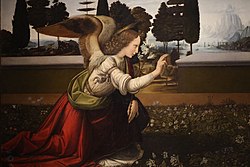
Angel Gabriel is known as one of the archangels in various religious texts, often acting as a messenger of God. He is a significant figure in Christianity, Judaism, and Islam, where he is credited with delivering important revelations, including the announcement of the birth of Jesus to the Virgin Mary.

Ángel Di María is an Argentine professional footballer who plays as a winger or attacking midfielder. He is known for his speed, dribbling, and playmaking abilities. Di María has played for several top clubs, including Real Madrid and Paris Saint-Germain, and has been a key player for the Argentina national team, contributing to their victory in the Copa América and the FIFA World Cup.

Angel Olsen is an American singer-songwriter known for her distinctive voice and poignant lyrics. She began her career in the indie music scene and has released several critically acclaimed albums that blend elements of folk, rock, and pop. Olsen's music often explores themes of love, loss, and identity.